Ficus Bonsai Leaves Falling Off? Causes and How to Fix It
Bonsai health · Updated
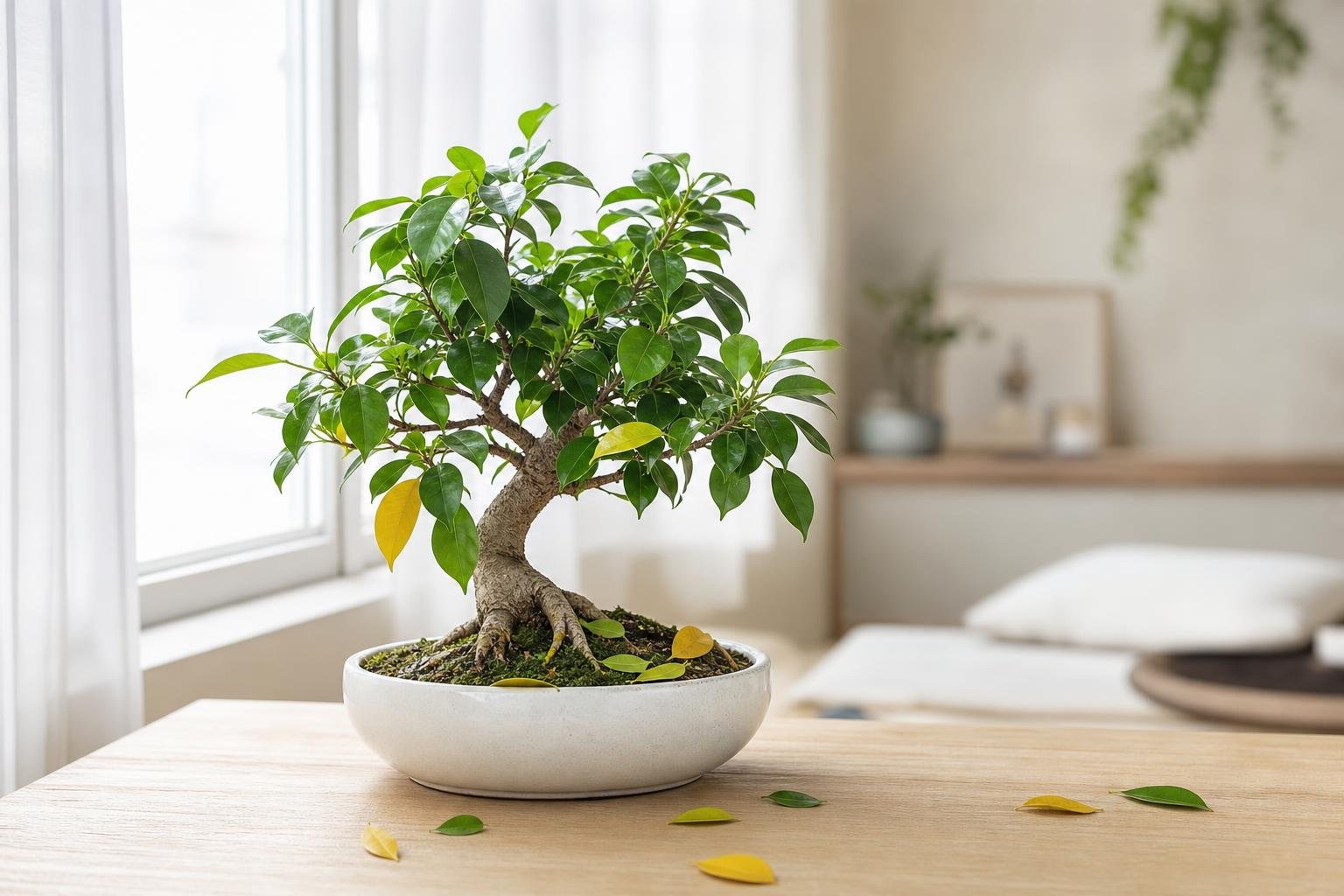
The ficus is the most popular indoor bonsai, and for good reason: it tolerates beginner mistakes, grows fast and recovers well. But it has one habit that alarms almost every new owner. When something in its environment changes, a ficus bonsai responds by dropping its leaves, sometimes dozens in a few days.
The good news: leaf drop on its own is rarely fatal. A ficus buds back readily, even from bare branches. The key is to identify what triggered it and fix that, without making several changes at once.
Why ficus bonsai leaves fall off
1. It was moved (the most common cause)
Ficus adapt their leaves to the light they grow in. Move the tree to a new spot, such as from the shop to your home, from outdoors to indoors, or from one window to another, and it often sheds leaves that are no longer suited to the new conditions. This is especially common in the first weeks after you buy one.
Fix: choose the brightest spot you can and then leave the tree there. Constant moving restarts the cycle every time.
2. Not enough light
Indoor light is much weaker than it looks to our eyes. In autumn and winter, when days are short, a ficus a few meters from a window may simply not get enough light to support all its leaves. It drops the weakest, usually the inner and lower ones, first.
Fix: place it right next to a bright south- or west-facing window (north- or east-facing in the Southern Hemisphere), or add a full-spectrum LED grow light for 12–14 hours a day through winter. In summer, most ficus thrive outdoors in a sheltered, bright spot once night temperatures stay mild.
3. Cold drafts and low temperatures
Common bonsai ficus such as Ficus retusa and Ficus microcarpa are subtropical. They do best above about 15°C (60°F) and start to suffer below about 10°C (50°F). A cold windowsill at night, an open door in winter, or a car ride home in the cold can all trigger sudden leaf drop. Leaves that yellow and fall quickly after a cold night point to this cause.
4. Watering problems
Both extremes cause leaf drop. Underwatered ficus leaves wilt, dry and fall, often green. Overwatered ficus drop yellowing leaves while the soil stays damp, and the roots start to rot in waterlogged soil.
Fix: water when the top centimeter of soil feels dry, then water thoroughly until it runs out of the drainage holes. Empty the drip tray so the pot never sits in water.
5. Dry air from heating
Ficus tolerate normal household humidity better than most tropicals, but a tree placed above a radiator or next to a heating vent dries out fast. Keep it away from direct heat sources. A humidity tray (a shallow tray of gravel and water under the pot) helps a little.
6. Pests
- Scale insects: small brown bumps on stems and the undersides of leaves, often with sticky residue. Scrape off and treat with horticultural oil.
- Mealybugs: white, cottony clusters in leaf joints. Remove with a cotton swab dipped in rubbing alcohol.
- Spider mites: fine webbing and pale speckled leaves, common in warm, dry rooms. Rinse the foliage and raise humidity.
7. Root stress after repotting
Some leaf drop is normal after repotting, especially if many roots were cut. Keep the tree out of strong direct sun for a couple of weeks, water carefully, and hold off on fertilizer for about a month while new roots grow.
Symptom checker
| Symptom | Likely cause |
|---|---|
| Sudden drop of healthy green leaves after moving the tree | Change of light / location |
| Gradual drop of inner and lower leaves in autumn or winter | Not enough light |
| Leaves yellow and fall within days after a cold night | Cold or drafts |
| Yellow leaves, soil always damp, sour smell | Overwatering / root rot |
| Wilting, dry, curling leaves that drop green | Underwatering |
| Sticky leaves, bumps or white fluff on stems | Scale or mealybugs |
How to get your ficus back into full leaf
- Check that it is alive. Scratch a small patch of bark on a branch. Green underneath means the branch is alive and will bud again.
- Pick one bright, stable spot and stop moving the tree.
- Keep it warm, ideally above 15°C (60°F), away from cold glass at night and away from radiators.
- Water by touch, not by calendar.
- Wait for new buds before fertilizing. Once new leaves appear, feed with a balanced fertilizer every 2–4 weeks during active growth.
- Prune lightly, or not at all, until the tree is growing well. Then use the regrowth to improve the shape: see when to prune bonsai.
Preventing leaf drop
- Give your ficus the brightest indoor spot you have, and supplement with a grow light in winter.
- Avoid sudden changes. When moving it outdoors for summer, acclimate it over a week or two.
- Keep it away from cold windows at night, open doors and heating vents.
- Use free-draining bonsai soil and water only when the surface is dry.
- Inspect leaves and stems regularly for pests.
Frequently asked questions
Will my ficus bonsai grow its leaves back?
Usually, yes. Ficus bud back readily from bare branches. As long as the branches are alive (green under the bark), new leaves typically appear within a few weeks once light, temperature and watering are corrected.
Is it normal for a ficus bonsai to drop leaves in winter?
Some leaf drop in winter is common indoors because light levels fall. Heavy leaf drop means the tree needs more light; a full-spectrum grow light for 12–14 hours a day usually solves it.
How often should I water a ficus bonsai?
There is no fixed schedule. Water thoroughly whenever the top centimeter of soil feels dry. Depending on the season, pot size and room temperature, that may be every day or once a week.