When to Prune Bonsai: A Season-by-Season Guide for Every Tree
Bonsai techniques · Updated
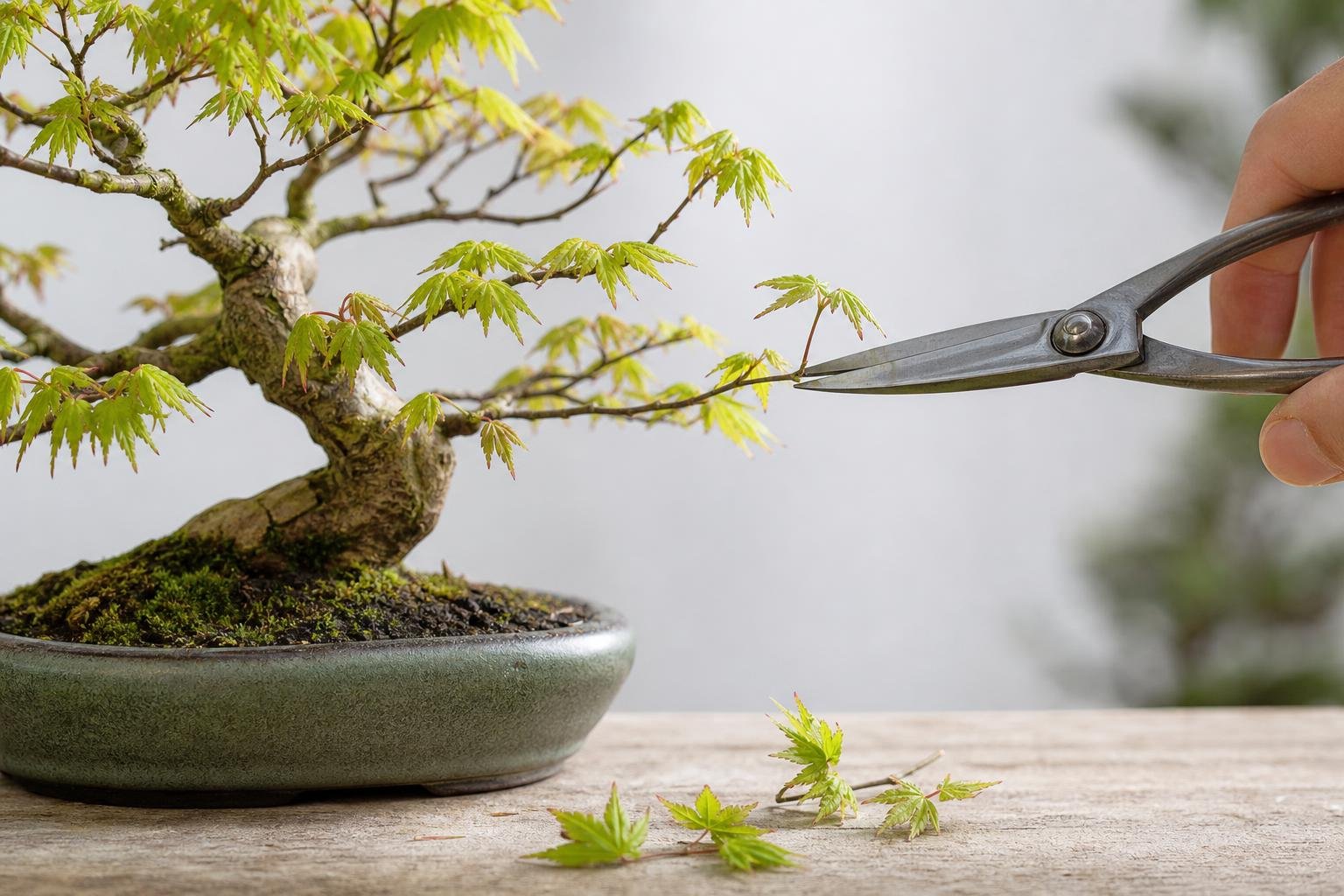
Pruning is the most important skill in bonsai, and timing is half of it. The same cut that makes one tree bud back densely in spring can weaken or kill a branch if it is made in the wrong season. The answer to when to prune a bonsai depends on two things: what kind of pruning you are doing, and what kind of tree you have.
Structural pruning vs maintenance pruning
Structural pruning means removing large branches or shortening the trunk to set the basic shape of the tree. It removes a lot at once, so it must be done when the tree has the most stored energy and can heal quickly.
Maintenance pruning means trimming and pinching new shoots to keep the shape and encourage finer branching (ramification). It removes small amounts often, through the growing season.
| Structural pruning | Maintenance pruning | |
|---|---|---|
| Goal | Set the main shape | Keep the shape, build density |
| What is cut | Thick branches, trunk | New shoots, leaves, buds |
| How often | Once a year at most per area | Several times per growing season |
| Typical timing | Late winter to early spring | Spring to late summer |
When to prune deciduous bonsai
Maples, elms, hornbeams, beech, zelkova and other trees that lose their leaves in winter follow a clear rhythm:
- Late winter to early spring (before buds open): the best time for structural pruning. With the leaves off, you can see every branch, and the tree is about to push strong growth that closes wounds quickly.
- Spring to early summer: let new shoots extend, then cut them back to one or two pairs of leaves. This is the main maintenance window.
- Early summer: healthy, vigorous trees can be partially or fully defoliated to reduce leaf size and increase branching. Only do this on strong trees.
- Late summer and autumn: avoid heavy pruning. Late cuts trigger soft new growth that can be damaged by frost, and the tree needs its leaves to store energy for winter.
When to prune junipers
Junipers can take structural work from late autumn through early spring, outside the hottest and coldest periods. During the growing season, trim extending shoots with sharp scissors to keep the foliage pads compact, always leaving green foliage on each branch. Junipers rarely bud from bare wood, so a branch cut back past its last foliage will usually die. That is a common reason for a juniper bonsai turning brown.
When to prune pine bonsai
Pines have their own timing because they grow in one main flush from “candles” (new shoots) in spring:
- Japanese black pine and red pine (two-flush pines): cut the spring candles off completely in early to mid summer (decandling). The tree then pushes a second, smaller set of shoots, which gives shorter needles and more branching.
- Scots, white and most other pines (single-flush): don’t decandle. Instead, shorten or pinch the candles in spring as they extend.
- Autumn: pluck old needles and thin crowded buds to balance the tree’s strength. This is also a good time for structural pruning of pines.
When to prune tropical and indoor bonsai
Ficus, Portulacaria (dwarf jade), Fukien tea and other tropicals have no true dormancy indoors, so you can prune them whenever they are actively growing. For a ficus, let a shoot grow 6–8 leaves and then cut it back to 2. Avoid heavy pruning when the tree is weak or has just dropped its leaves. Let it recover first.
When to prune flowering bonsai
Azaleas, flowering quince, cherries and other flowering trees set next year’s flower buds during summer. Prune right after flowering. Pruning in late summer, autumn or winter removes the buds and you lose next year’s flowers.
Bonsai pruning calendar by species
| Species | Structural pruning | Maintenance pruning |
|---|---|---|
| Juniper | Late autumn – early spring | Spring – late summer, with scissors |
| Japanese black pine | Autumn – late winter | Decandle early–mid summer |
| Scots / white pine | Autumn – late winter | Pinch candles in spring |
| Japanese maple | Late winter, before bud break | Pinch new shoots in spring |
| Trident maple | Late winter, before bud break | Spring – summer, cut back to 1–2 pairs of leaves |
| Chinese elm | Late winter – early spring | Spring – late summer, cut back to 2–3 leaves |
| Ficus | Spring – summer (active growth) | Whenever growing: let 6–8 leaves grow, cut to 2 |
| Azalea | Right after flowering | Right after flowering |
| Boxwood | Early spring | Spring – late summer |
These timings are for temperate climates in the Northern Hemisphere. Shift them by six months in the Southern Hemisphere, and follow the tree rather than the calendar: buds swelling is the signal for spring work, wherever you live.
When not to prune a bonsai
- When the tree is weak, sick, or recovering from pests
- Right after heavy repotting: let the roots recover first
- In late summer and autumn for deciduous trees (heavy pruning)
- During extreme heat waves or hard frost
- Just before flowering on flowering species
How much to prune, and how to cut
- Remove no more than about a third of the foliage in one session.
- Use sharp, clean tools, and sterilize them between trees.
- Use a concave cutter for branch removal on deciduous trees; the slightly hollow wound heals flat. Seal larger cuts with cut paste.
- On conifers, leave a short stub when removing branches; it can later become a jin (deadwood feature).
- Cut just above a bud or leaf that points in the direction you want the next shoot to grow.
After pruning comes positioning. Once the right branches remain, wiring puts them where they belong.
Frequently asked questions
What month should I prune my bonsai?
For most temperate bonsai in the Northern Hemisphere, structural pruning is done in February–March, just before buds open, and maintenance pruning from April to August. Tropical indoor bonsai can be pruned whenever they are actively growing.
Can I prune my bonsai in winter?
Deciduous trees can be structurally pruned in late winter while dormant, and junipers and pines tolerate winter work, but avoid pruning during hard frosts. Tropical indoor bonsai are best pruned in spring and summer.
How often should I prune a bonsai?
Structural pruning is done once a year at most on any part of the tree. Maintenance pruning happens several times per growing season, whenever new shoots extend beyond the desired shape.