How to Wire a Bonsai Tree: A Step-by-Step Guide for Beginners
Bonsai techniques · Updated
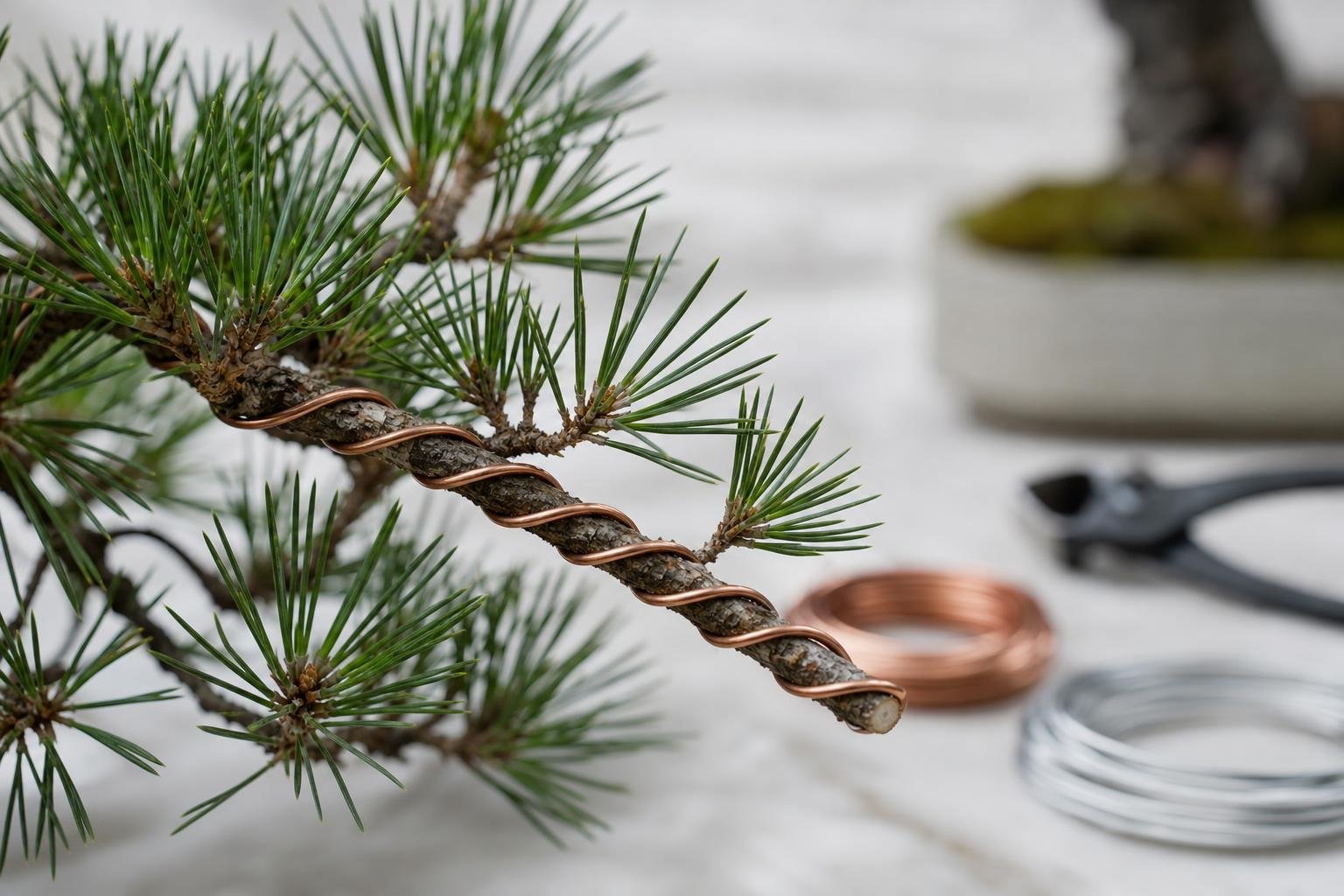
Wiring is what turns a pruned tree into a bonsai. By wrapping wire around the trunk and branches, you can bend them into position and hold them there until the wood sets, usually within a few months. Done well, it creates the movement and layered branches of an old tree. Done badly, it snaps branches or leaves spiral scars in the bark. This guide shows you how to wire a bonsai tree safely, step by step.
Copper or aluminum wire?
| Anodized aluminum | Annealed copper | |
|---|---|---|
| Best for | Beginners, deciduous trees, tropicals | Conifers: junipers and pines |
| Holding power | Lower: you need a thicker gauge | About 1.5–2× stronger at the same thickness |
| Ease of use | Soft and forgiving, easy to reposition | Hardens as you bend it; harder to work |
| Look | Brown or black, discreet | Weathers to a dark brown that blends in |
| Cost | Cheaper | More expensive |
If you are just starting, buy aluminum in four or five sizes (for example 1, 1.5, 2, 3 and 4 mm). It covers almost every job on a small to medium bonsai.
Choosing the right wire size
The classic rule: use aluminum wire about one third the thickness of the branch you are bending. Copper can be a little thinner. Test it: wrap a short length and gently bend the branch. If the branch springs back, use a thicker wire. For a stubborn branch, two parallel wires work better than one very thick one.
When to wire a bonsai
- Deciduous trees: late winter, before the buds open, when you can see the structure; or late spring once new shoots have hardened. Avoid wiring during the spring growth spurt, when the bark is loose and easily damaged.
- Junipers and pines: autumn to late winter. Branches are flexible and the wire can stay on for months without biting.
- Tropicals such as ficus: during active growth, but check the wire often. They thicken fast.
- Never wire a tree that is weak, sick, or has just been heavily repotted.
How to wire a bonsai, step by step
1. Plan the bends
Decide where every branch should go before you start. A typical mature-tree look: lower branches angle slightly downward from the trunk, then the tips turn up and spread into a flat “pad” of foliage. Add gentle side-to-side curves rather than straight lines.
2. Work from thick to thin, trunk to tips
If the trunk needs wiring, do it first, then the main branches, then the secondary branches, then the fine twigs. Wire the lowest branches before the upper ones.
3. Anchor the wire
Wire only holds if it is anchored. The most efficient method is to wire two branches of similar thickness with one piece of wire, wrapping it around the trunk between them, so each branch anchors the other. For a single branch, anchor the wire by wrapping it twice around the trunk (or pushing the end into the soil, for the trunk itself) before it runs out onto the branch.
4. Coil at about 45°
Wrap the wire along the branch at an angle of roughly 45°. Coils that are too tight (close together) cut into the bark and don’t hold well; coils that are too loose (stretched out) don’t hold the bend. The wire should touch the bark along its length without digging in. Support the branch with your other hand as you wrap.
5. Wire in the right direction
For a branch you want to bend downward, the wire should run from below and come up over the top as it leaves the trunk, so it supports the bend rather than unwinding. In practice: wrap so the wire sits on the outside of each bend you plan to make.
6. Avoid crossing wires and trapped leaves
Keep wires parallel and neat; crossed wires cut into each other and the bark. Don’t trap leaves or needles under the wire, and wire around buds rather than over them.
7. Bend slowly and carefully
Hold the branch with both hands, with your thumbs on the inside of the bend as support, and bend slowly. Listen and feel: a faint cracking sound means you are at the limit. For heavy bends, wrap the branch in damp raffia first. For thick branches that wire can’t hold, use a guy wire, a wire anchored to the pot or a lower point of the trunk that pulls the branch down.
How long to leave the wire on
Wire stays on until the branch holds its new position by itself. That can be a few weeks for vigorous deciduous trees and tropicals in summer, or 6–12 months for junipers and pines. The real rule is to check every week or two during the growing season. As soon as the branch thickens enough for the wire to start pressing into the bark, remove it. A few days too long can leave scars that take years to disappear.
If a branch springs back after removal, simply rewire it, ideally with the coils running in the opposite direction so they don’t follow the old marks.
How to remove bonsai wire
Cut the wire off in short pieces with wire cutters, one coil at a time. Don’t unwind it: pulling the wire back around the branch can tear the bark and snap the branch you have just shaped.
Common wiring mistakes
- Wire too thin to hold the bend, or so thick it crushes the branch
- No anchor: the wire spins around the branch and holds nothing
- Coils too tight or too loose instead of about 45°
- Bending fast without supporting the branch from the inside
- Forgetting to check the wire and letting it bite into the bark
- Wiring a weak tree, or one that is pushing soft spring growth
Starting with a garden-center tree? Our guide on how to make a bonsai from nursery stock shows where wiring fits into the first styling session.
Frequently asked questions
What size wire do I need for my bonsai?
Use aluminum wire about one third the thickness of the branch you are bending, or slightly thinner if you use copper. Test by wrapping and bending: if the branch springs back, go up a size or add a second parallel wire.
Can I use regular wire from a hardware store?
It is not recommended. Bonsai wire is annealed (softened) so it bends easily and holds its shape. Hardware wire is usually too stiff or galvanized, which can damage bark. Plastic-coated garden wire doesn’t hold bends well.
How long should wire stay on a bonsai?
Until the branch holds its position by itself: a few weeks for fast-growing deciduous trees and tropicals, up to 6–12 months for conifers. Check every week or two and remove the wire as soon as it starts pressing into the bark.