Juniper Bonsai Turning Brown? 7 Causes and How to Save It
Bonsai health · Updated
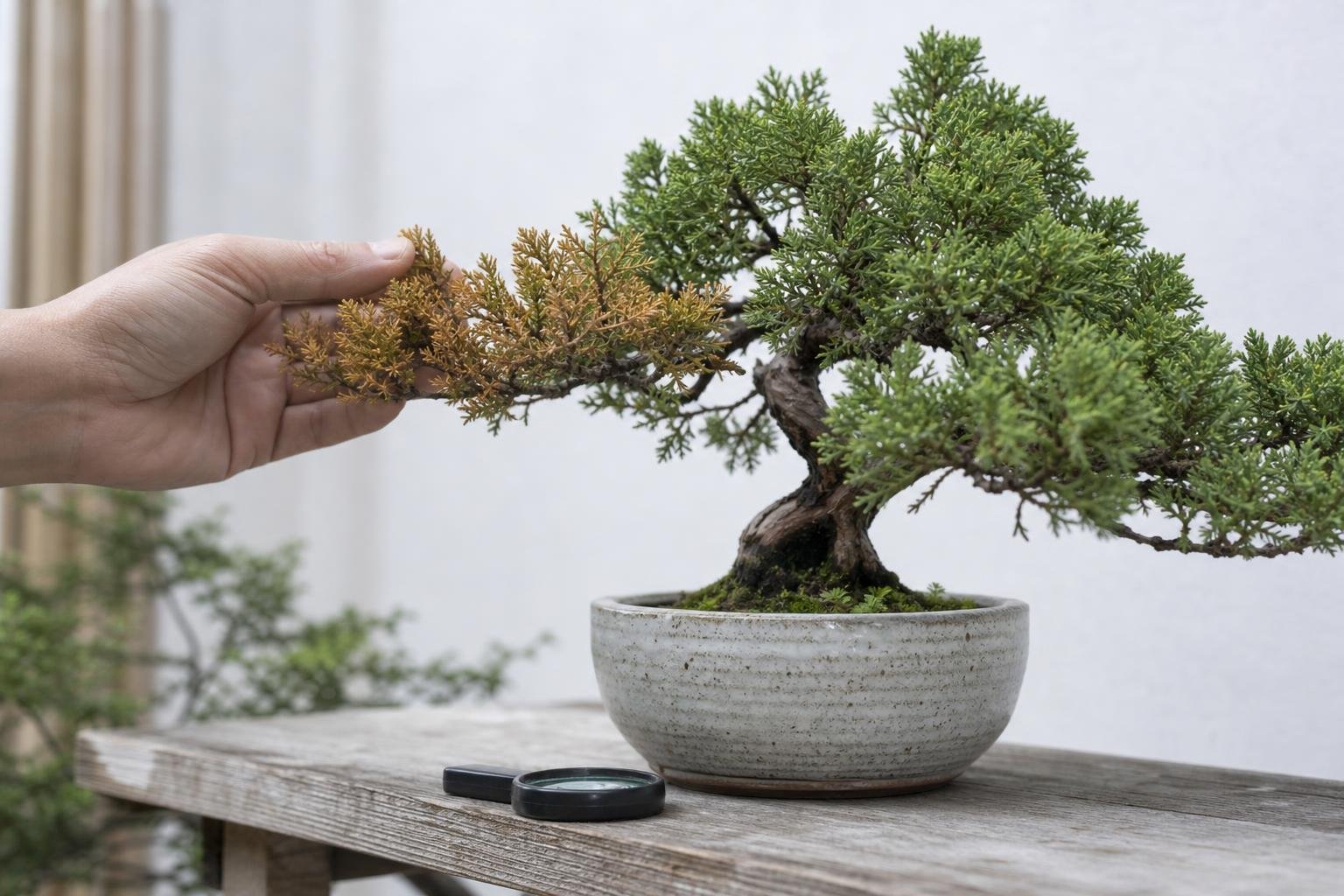
Junipers are the most popular bonsai trees in the world, and also among the most misunderstood. When a juniper bonsai turns brown, owners usually react by watering more, moving the tree, or fertilizing it, and often make things worse. Browning has several very different causes, and the right fix depends entirely on which one you are dealing with.
This guide walks through the seven most common causes, how to tell them apart, how to check whether your tree is still alive, and what to do next.
First: is your juniper still alive?
Junipers hide stress well. By the time foliage turns brown, the problem often started weeks earlier, so the first job is to find out whether there is still living tissue to save.
- Do the scratch test. With a fingernail or a small knife, gently scrape a tiny patch of bark on a branch and on the trunk. Moist, green tissue underneath means that part is alive. Dry, brown tissue means it is dead.
- Test several places. A juniper can be dead in one branch and healthy in another. Work from the tips toward the trunk to find where living tissue starts.
- Check the foliage. Green foliage that feels supple is alive. Brown foliage that crumbles when rubbed is dead and will not turn green again.
- Check the roots. Slide the tree out of its pot if you can. Healthy roots are light-colored and firm. Black, mushy roots that smell sour point to root rot.
The 7 most common causes of a juniper bonsai turning brown
1. It is being kept indoors
This is the number one cause, especially with the “mallsai” junipers (usually Juniperus procumbens ‘Nana’) sold as indoor plants. Junipers are outdoor trees. Indoors they get a fraction of the light they need and no cold winter rest. The decline is slow: the tree can look fine for months, then fade from green to dull grey-green and finally brown.
Fix: move the tree outside permanently. If it has been indoors for a long time, give it a week or two in bright shade before moving it into full sun, so the foliage isn’t scorched.
2. Underwatering and a dried-out root ball
Bonsai pots hold very little soil, and a juniper in full summer sun can dry out in a single day. Drought damage typically shows as crispy, brown tips or whole branches that brown at once. Compacted old soil makes it worse, because water runs down the sides of the pot without soaking the root ball.
Fix: submerge the whole pot in a bucket of water for 10–15 minutes until the bubbles stop, then let it drain. From then on, water thoroughly whenever the top of the soil is just turning dry, which may mean every day in summer.
3. Overwatering and root rot
The opposite problem looks similar from above. Soil that stays wet suffocates the roots, which then rot and can no longer supply water. The tree browns even though the soil is damp. Overwatering usually comes from dense, peaty soil, a pot with blocked drainage holes, or watering on a fixed schedule instead of when the tree needs it.
Fix: let the soil dry slightly between waterings. If the roots are black and mushy, carefully remove the rotten roots and repot into a free-draining bonsai mix (akadama, pumice and lava rock). Root work on a weak tree is risky, so only do this when rot is confirmed.
4. Normal seasonal shedding
Not all browning is a problem. Junipers shed their oldest, innermost foliage, most often in autumn. If the browning is limited to the interior of the tree, close to the trunk, and the outer tips are green and growing, this is natural. Brush the dead foliage out by hand to let light into the tree.
5. Winter bronzing
Many junipers take on a purple, bronze or brownish tint in cold weather. The foliage stays supple and alive, and the color returns to green in spring. If the whole tree changed color evenly as temperatures dropped and the foliage isn’t brittle, this is almost certainly winter color, not damage.
6. Pests and disease
- Spider mites: foliage looks dull, mottled and pale before turning brown. Hold white paper under a branch and tap it. Tiny moving specks confirm mites. Rinse the foliage with a strong spray of water and treat with a miticide if needed.
- Juniper scale: small white or grey bumps on the foliage and bark that suck sap. Remove by hand and treat with horticultural oil.
- Tip blight: fungal diseases (Phomopsis and Kabatina) brown the branch tips, often in spring. Cut out infected tips back into healthy green growth, sterilize your tools between cuts, and keep foliage dry when watering.
7. Stress from pruning, pinching or repotting
Removing too much foliage at once, or cutting back into bare wood, can kill whole branches, because junipers rarely bud from old wood. Pinching juniper foliage with your fingers, as older books recommend, also browns the tips. Use sharp scissors instead. Heavy root pruning and heavy top pruning in the same season can be too much for the tree to survive.
Quick diagnosis table
| What you see | Most likely cause |
|---|---|
| Slow fade to grey-green, then brown, on a tree kept indoors | Not enough light / no winter rest |
| Crispy brown tips or whole branches after hot weather | Underwatering |
| Browning while the soil stays wet; dark, soft roots | Overwatering / root rot |
| Only inner, older foliage browns in autumn | Natural shedding (normal) |
| Whole tree turns purple-bronze in winter, foliage still supple | Winter bronzing (normal) |
| Dull, speckled foliage; tiny specks on white paper | Spider mites |
| Brown tips appearing in spring, spreading branch to branch | Tip blight |
How to save a browning juniper bonsai
- Find the cause first. Use the table above. Treating the wrong problem, such as watering a tree with root rot, speeds up the decline.
- Put the tree outdoors in bright light. Give it morning sun and some afternoon shade while it recovers, and protect it from strong wind.
- Fix the watering. Water thoroughly when the surface is just drying out, and never leave the pot standing in water.
- Don’t fertilize. A struggling tree can’t use fertilizer, and it can burn weakened roots. Start feeding lightly only once you see new green growth.
- Remove only what is dead. Cut away brown, dead foliage and branches that fail the scratch test. Leave every bit of green, even if it looks untidy.
- Avoid repotting, wiring and styling until the tree is clearly growing strongly again, usually the next season.
- Be patient. A recovering juniper may take a full growing season to show strong new growth.
How to keep your juniper green
- Keep it outdoors all year, in full sun, with protection from hard frost in pots during severe winters.
- Use a free-draining bonsai soil and water by need, not by schedule.
- Prune with scissors, never cut back to bare wood, and never remove more than about a third of the foliage at once.
- Inspect the foliage every week or two for mites and scale, especially in hot, dry weather.
- Learn the right time to prune each kind of bonsai so that you only do heavy work when the tree can recover.
If your juniper came from a garden center, our guide on how to make a bonsai from nursery stock shows how to start it off strong.
Frequently asked questions
Can a brown juniper bonsai turn green again?
No. Foliage that has turned fully brown is dead and will not recover. The tree can survive if some branches are still green and pass the scratch test; those parts will produce new foliage.
Can I keep a juniper bonsai indoors?
Not long term. Junipers need full outdoor light and a cold winter dormancy. Indoors they slowly weaken and turn brown, usually within a few months. They can come inside for a few hours for display.
Why is my juniper bonsai brown on the inside?
Browning limited to the innermost, oldest foliage, especially in autumn, is normal shedding. As long as the outer tips are green and growing, simply brush the dead foliage out.